Not long ago, when I was in the lands east of the Sun and west of the Moon, I chanced upon a near-forgotten PDF: The Gygax 75 Challenge.
The conceit of this little booklet is based on a 50-year-old article penned by (as you might expect) E. Gary Gygax in the pages of the wargaming newsletter Europa (April 1975), titled “How to Set Up Your Dungeons & Dragons Campaign — and Be Stuck Refereeing It Seven Days per Week until the Wee Hours of the Morning!” (phew!). What the booklet does is turn Gygax’s advice into a program for creating your own campaign setting, and that’s what I intend to do with this series.
For the next five weeks (Real Life permitting), I’ll be posting my progress on this little project, which I hope to eventually take and turn into a setting for the Hot OSR Game of the Moment, Shadowdark. So let’s dive right in, shall we?
“Step 1 is something you do in your head. Now, fantasy/swords & sorcery games need not have any fixed basis for the assumptions made by its referee (my own doesn't) except those which embrace the whole of fantasy. This sort of campaign can mix any and all of the various bases which will be mentioned below - and then some. […] Settings based upon limits (if one can speak of fantasy limits) can be very interesting in themselves providing the scope of the setting will allow the players relative free-reign to their imaginations.”
Following the directives in the booklet, I have three primary and up to two “extra credit” tasks.
Get/create a notebook. Sorted! In addition to this blog series, I have my usual Google Doc for dumping links, brain droppings, musings, and so forth.
Develop your pitch. Based on an aborted game design project with my friend and collaborator Alex Drusts, the working title of this setting is Moroz, the Old Russian word for frost. This is intended to be a world that evokes Slavic fairy tales and pagan myth, a topic I’ve held an interest in for a long time. Some bullet points:
This is a highly elemental setting. The core setting of Moroz is a land of Wood: endless stretches of forests punctuated by nine great rivers (which flow down from condensation on the trunk of the World Tree) and human settlements. To the north is a land of Ice and Snow which also serves as the afterworld for the souls of sinners and heretics, condemned to forever toil under the lash of the cruel Marena, Tsarina of the Frozen Wastes. To the south is a land of Fire, a strange realm with many great treasures to trade for...or to plunder. To the east and west lie vast Oceans, created when Mother Damp Earth first melted the snows of Grandfather Frost.
There are twelve great cities in Moroz, each founded by one of the Grand Princes, though perhaps one or two lay in ruins now. The princely class is large and not necessarily tied to wealth or prestige; your status as a “prince” (or “princess”) is determined by your descent from one of the first founders, and each of the twelve bloodlines carries its own blessings (rolled on a random table, of course!). In essence, if you possess a character class, you are of a royal bloodline.
The world is a flat disc. The ice and fire of the north and south, respectively, and the endless oceans of the east and west, form the boundaries. The World Tree rises as the center of the disc, ascending literally to heaven. The brightness overhead is provided by pinpoints of light filtering down from the canopy, which itself forms the foundation of a land of eternal light and warmth provided by the divine presence of Firebird. There is technically no day/night cycle in Moroz; the land is instead bathed in a sort of perpetual half-light, like dusk, which grows worse when storms blow in from the north, sent by the vengeful Marena. Light is provided by fire, of course, but also by icons of the Mother Damp Earth, the Grand Princes, and other saints, which literally glow with holy brilliance and cast back the dark and its forces. The dark underworld, where light cannot penetrate, is the home of Tchernobog and his demonic minions, and only foolhardy adventurers descend into those labyrinthine caverns…
Due to the threat of frost knights, samodiva raids, and demons from below, most Morozian settlements are clustered around fortress-monasteries, each of which boasts its own palladium (guardian spirit) of Mother Damp Earth. The monks of these settlements are the most powerful theological and administrative power in Moroz, and wield it with a certain arrogance that is only half-deserved. Marena’s holy counterpart, the ever-reincarnating Tsarina Lada, commands a private army of paladins who revere her as a living god (which indeed she is), but whose methods are often...overzealous, to put it mildly. Meanwhile, in the dark woods, crazed hermits decry the corruption of the holy Tsarina and call for reforms and purges while demonstrating amazing feats of healing magic and personal endurance. And traveling from town to town are the itinerant bands of jesters and bards who make up the ranks of the skomorokhs—warlocks who have pledged themselves to the forgotten deity Jezda the Witch...or even some who secretly serve the Dark God Tchernobog!
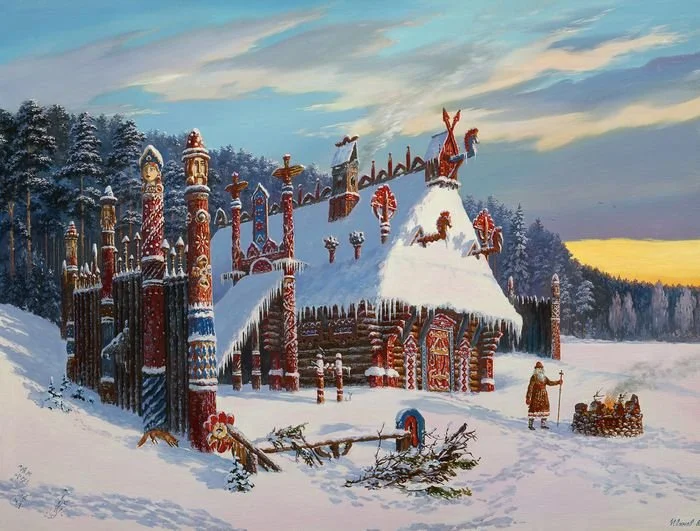
Gather Your Sources of Inspiration. The Gygax 75 pamphlet advises culling this list to no more than seven sources, which is definitely a tough remit when it comes to something as rich and storied as Slavic folklore. As such, I’m going to lean heavily on art, movies, and gaming books, which do a great job of distilling a lot of information and inspiration into densely packed parcels.
The art of Vsevolod Ivanov
A truly remarkable artist, his “Vedic Rus” series could very well be the art of Moroz; featured in the above image!GURPS Russia
One of the best GURPS supplements ever written, S. John Ross’s tour de force helped crystalize my love of Slavic history and folklore and is still a solid reference document in its own right.Codex Slavorum
Part of a series put out by Troll Lord Games for their Castles & Crusades line, Brian N. Young’s sourcebook of gods, monsters, and mythology shows how to do Slavic folklore as a game setting.Black Earth: A Field Guide tot he Slavic Otherworld
Andrew Paciorek’s encyclopedic collection of Slavic myths is perhaps the chief source of inspiration for the lore of Moroz. Great illustrations, too!Slavic Mythology Collection: Fairy Tales of the Slav Peasants and Herdsmen along with Sixty Folk-Tales from Exclusively Slavonic Sources
Of the many, many collections of Slavic folk tales, this one is a treasure, and another major source of inspiration along with Black Earth.Viy (1967)
The imagery of the devils and monsters in this wonderful horror-comedy romp is exactly how I envision the forces of Tchernobog.The Last Warrior (2017)
Not a good movie, per se, but does for Slavic folklore what the TV series Once Upon a Time did for Western fairy tales, mashing everything up in a tasty stew of inspiration.
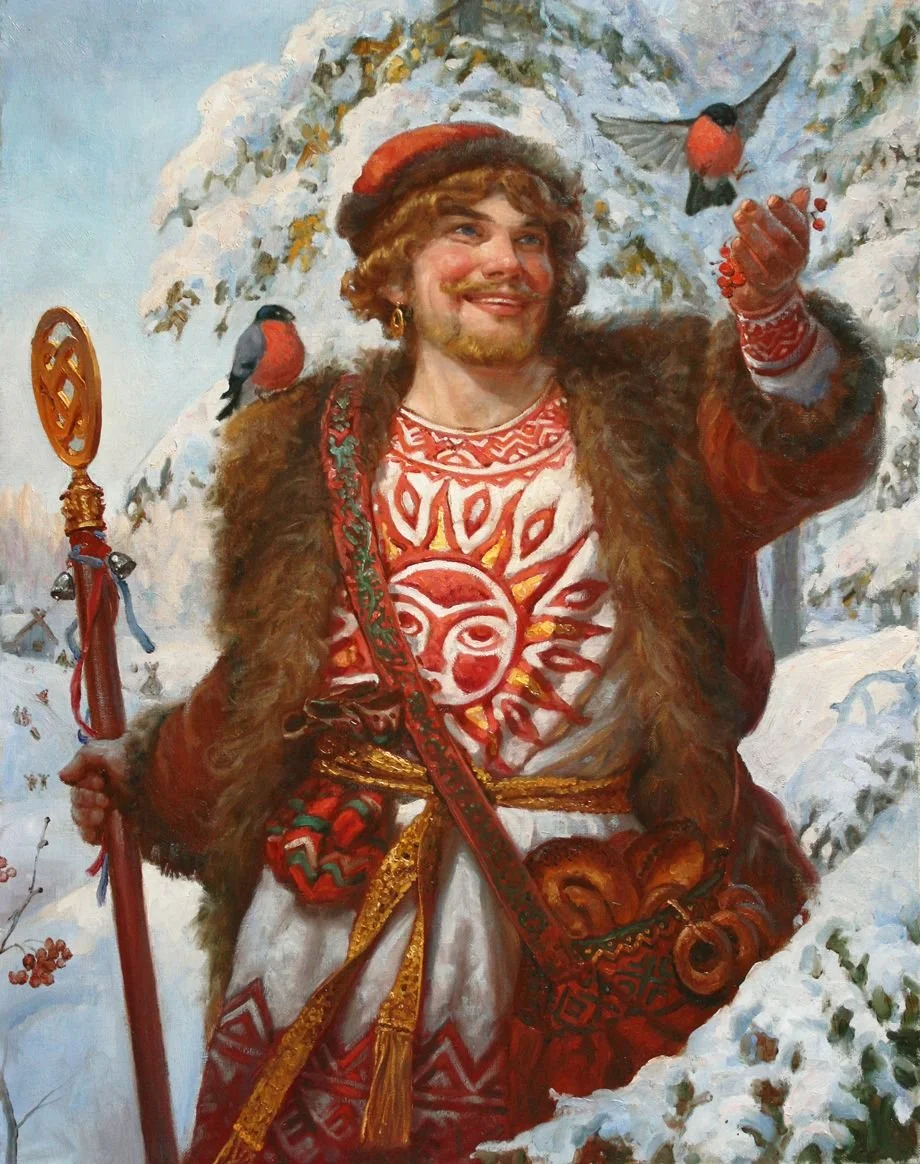
Assemble a Mood Board (extra credit). I do love me a Pinterest board, and you know I had to do one for Moroz!
Quisque iaculis facilisis lacinia. Mauris euismod pellentesque tellus sit amet mollis.